
Primavera nelle Marche/2 / 🇮🇹 🇬🇧
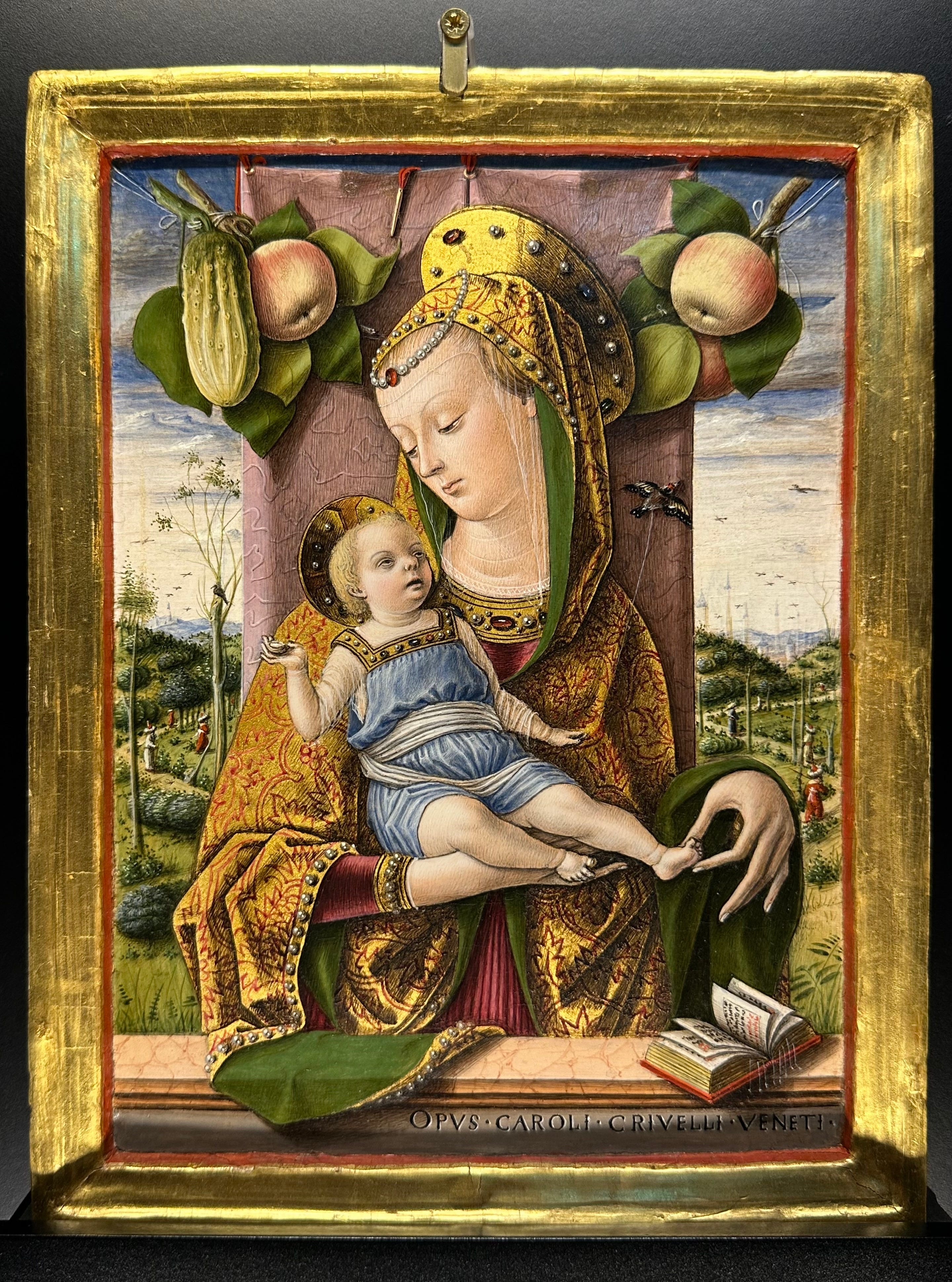
Sopra ogni cosa desideravo evitare il cliché. Ma dite voi se è possibile schivare Crivelli. Qui la verdeggiante Madonna con Bambino, 1480 ca., già nella Chiesa anconetana di San Francesco in Alto

🇬🇧 English Version below
Desideravo sopra ogni cosa evitare il cliché. Ma pare non sia possibile. Dopo i Crivelli di Ascoli, Montefiore sull’Aso, Corridonia, Macerata, Sant’Elpidio al Mare, Massa Fermana ecco che resta ancora l’occasione di un nuovo stupore: davanti a questa Madonna “giardiniera” di Ancona, piccola o piccolissima nel formato quanto minuziosa nell’esecuzione, inattesa e regale per splendore, meditata e pungente nei riferimenti alle Sacre Scritture. Pare insensato proporsi di schivare Crivelli nell’avviare un diario di viaggio marchigiano.
Racconta Giovanni, in Vangelo 20, 1418, che Maddalena si era recata al sepolcro. Trovandolo vuoto, era scoppiata in lacrime. Fu allora che due Angeli vestiti di bianco si erano rivolti a lei, chiedendole perché disperasse; e un giardiniere le si era avvicinato. Dapprima Maddalena non aveva riconosciuto Gesù. Ma non appena il Risorto ebbe parlato, ecco che Maddalena si slanciò verso di lui chiamandolo “Rabbi”, Maestro. Gesù però non si lasciò avvicinare (fu in quest’occasione che, per usare il latino della vulgata, pronunciò le parole “Noli me tangere”). Esortò invece Maddalena a andare dai discepoli per annunciare la sua Resurrezione.
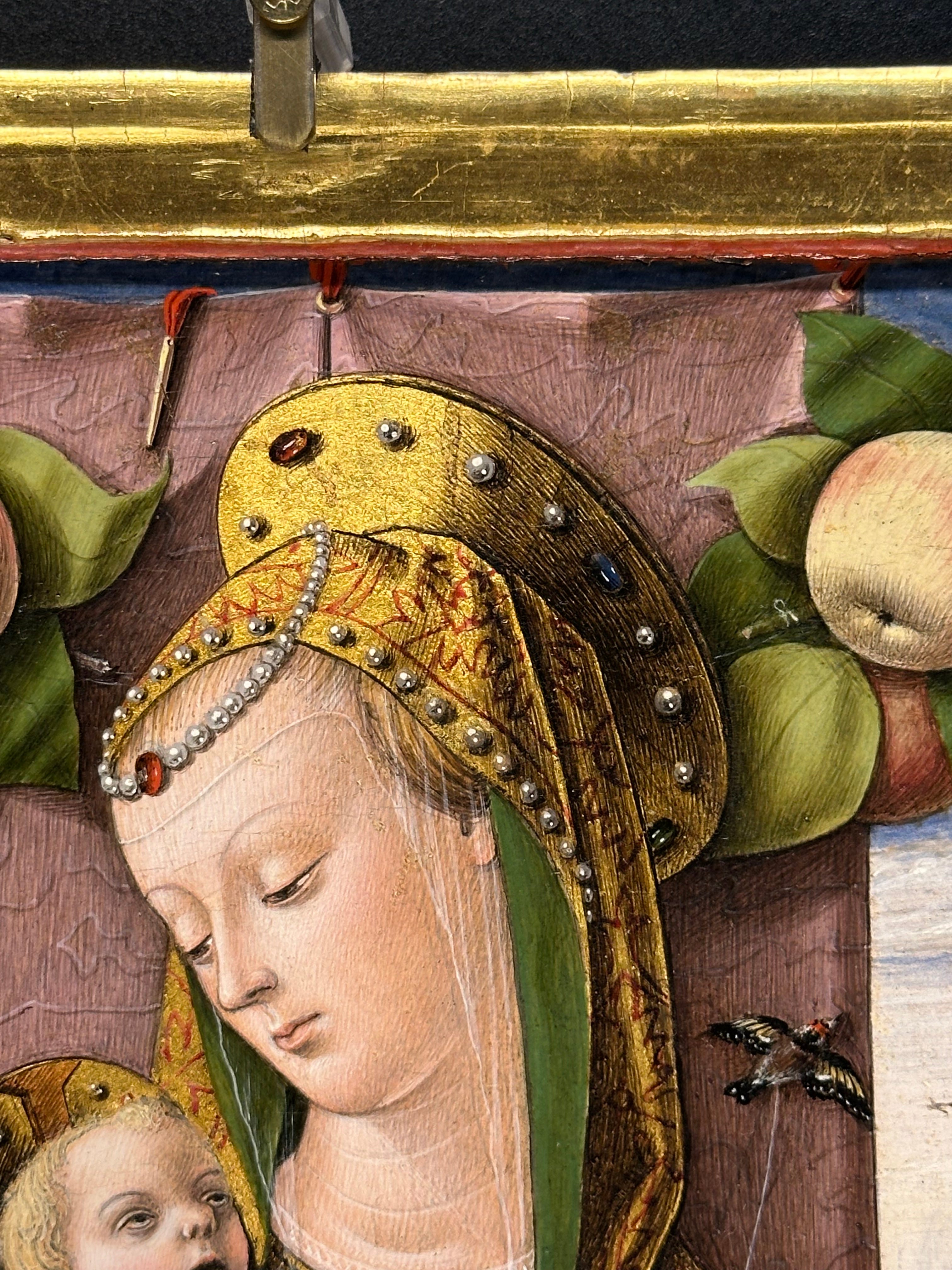
Crivelli deriva un mondo dall’episodio di Cristo Giardiniere: perché la natura che si rinnova e nutre ha ai suoi occhi le vesti gloriose del Cristo risorto, e annuncia la Resurrezione, quasi come Maddalena. Ghirlande di verzura adornano qui la Madonna rinviando, oltreché alla Resurrezione, a Eva e al sacrificio di Cristo. Questi è Perla nel Vangelo di Matteo (13, 45-46); e perle innumerevoli adornano qui il nimbo e la fronte della Madre di Dio. Il Bambino, il cui nimbo è pure punteggiato di perle, impugna una mandorla sgusciata: allusione questa forse alla dolcezza che si dischiude a chi, vero credente, ha la perseveranza e il rigore richiesto dalla fede. D’altra parte Maria sfoggia un velo sottilissimo, perché proprio lei presta il velo della Carne al Figlio di Dio.
Sullo sfondo misteriosi giardinieri accudiscono alla radiosa primavera del dipinto; mentre il rubino sulla fronte di Maria, color sangue, anticipa dolorosamente la Crocifissione. Secondo la tradizione apocrifa un cardellino si sarebbe avvicinato alla Croce di Cristo, e avrebbe così macchiato il suo candido piumaggio con le stille del suo sangue: per questo troviamo qui il cardellino, sorpreso in volo da Crivelli un attimo dopo essersi posato sul Bambino.
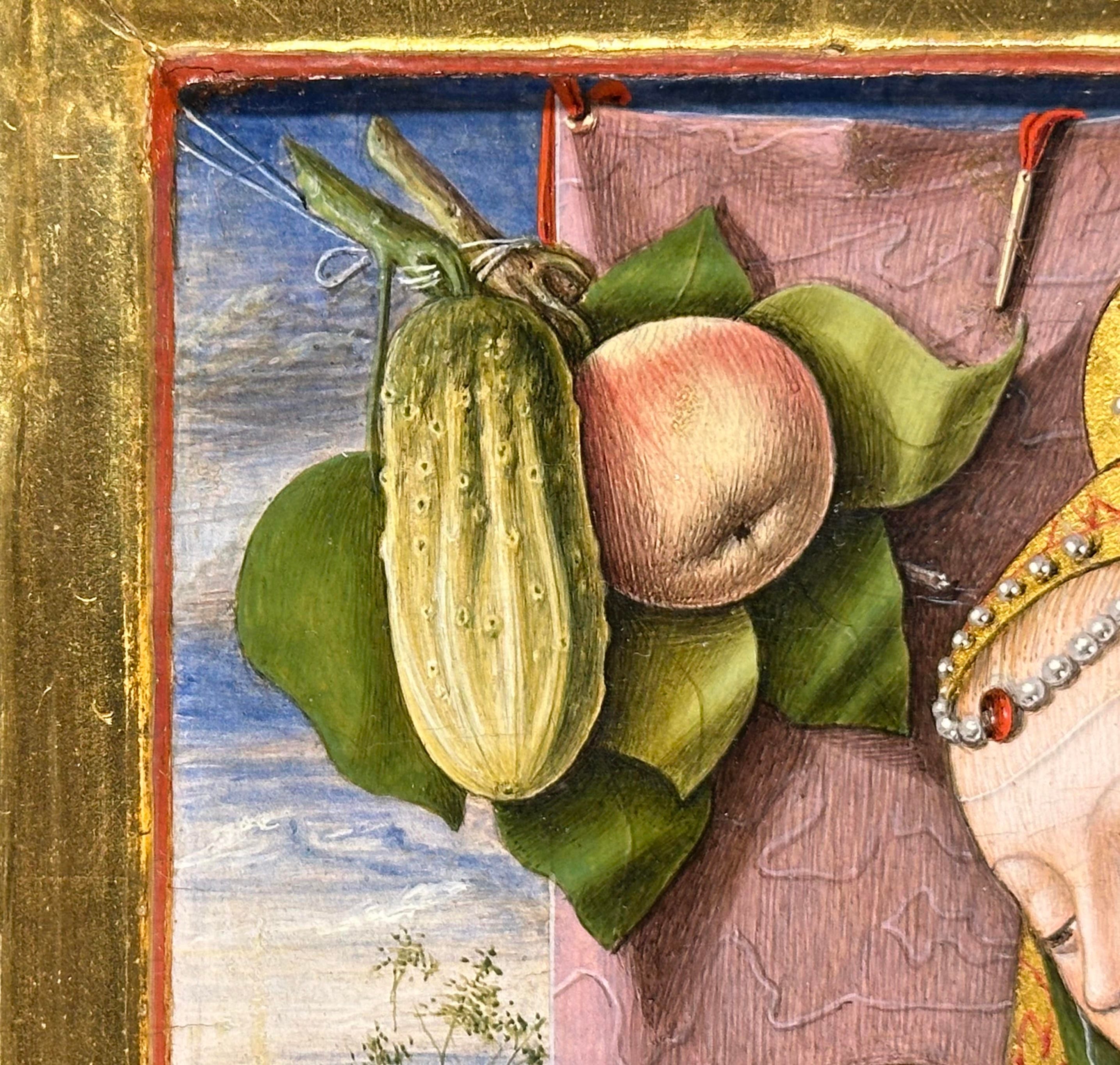
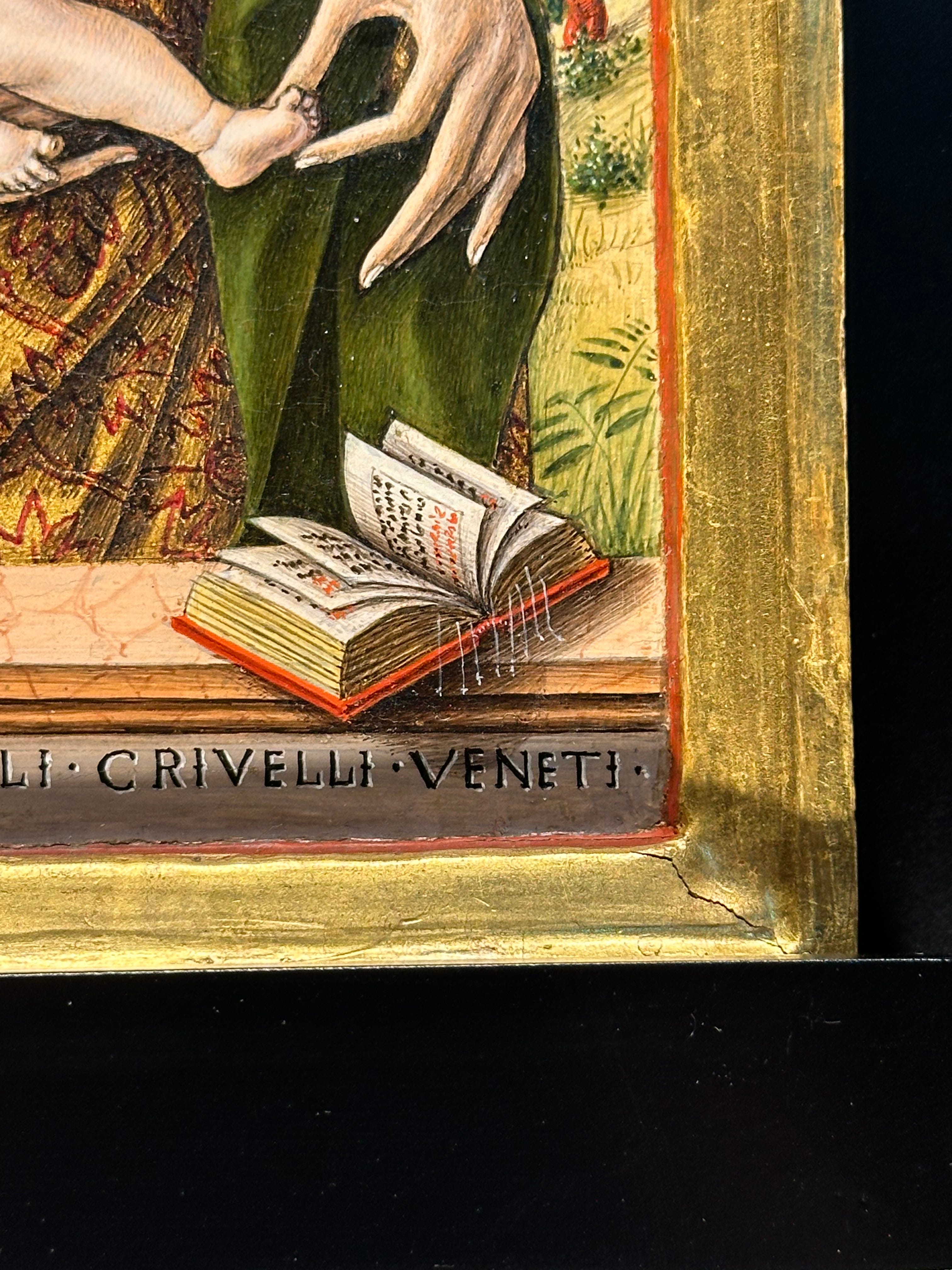
La severità si intreccia in Crivelli con la finezza, la gravità con l’ironia, la profezia con l’osservazione arguta e vivace, tratta dal quotidiano: così la Vergine carezza il piede sinistro del Bambino, quasi a “contenerne” l’inquietudine, e otto fili d’oro segnano le pagine dell’Antico Testamento su cui Maria va meditando, in chiave che possiamo immaginare “figurale” (tale cioè, che l’Antico Testamento costituisca prefigurazione del Nuovo). Così la melanzana è accuratamente fissata al sostegno dal filo che ne attraversa il peduncolo, e l’asola dell’arazzo alle spalle di Maria, offerto al tatto dal gran rilievo arabescante che ricorda un Savinio anni Trenta, disegnata con ogni cura di dettaglio.
Più sotto, augusta, la scritta “Opus Caroli Crivelli Veneti”: non solo orgoglio, o legittima ambizione - la fama delle mie opere, sembra affermare qui Crivelli, è destinata a sfidare il tempo, a mantenersi salda come roccia -. Ma testimonianza, ferma e immutabile appunto come pietra e marmo.
Grazie per aver letto The Bibliophile, la sezione del blog dedicata alla riconsiderazione di classici, anteprime, reprints e rariora. Iscriviti per ricevere i prossimi articoli e supportare il mio lavoro.
Sei già iscritto? Considera allora la possibilità di fare upgrade per avere un’esperienza più completa del blog.
Per regalare il blog invece clicca qui!
Se desideri condividere questo contenuto, clicca il pulsante qui sotto.
🇬🇧I desired, above all else, to sidestep the cliché. Yet it seems the endeavor is futile. Following the Crivelli masterpieces of Ascoli, Montefiore dell’Aso, Corridonia, Macerata, Sant’Elpidio al Mare, and Massa Fermana, there remains yet another occasion for fresh astonishment: this Madonna as Gardener in Ancona. Diminutive—diminutive, in fact, to the point of the minuscule—in its format, it is nonetheless fastidious in execution, unexpected and regal in its splendor, and both meditative and poignant in its evocations of Holy Scripture. It appears nonsensical to even propose evading Crivelli when embarking upon a travelogue of the Marche.
John recounts, in Gospel 20:14-18, that Mary Magdalene went to the sepulcher. Finding it empty, she dissolved into tears. It was then that two angels robed in white addressed her, inquiring after her despair; a gardener then approached. Initially, the Magdalene failed to recognize Jesus. Yet the moment the Risen Christ spoke, she lunged toward Him, crying “Rabboni”—Teacher. Jesus, however, forbade her approach (it was on this occasion that He uttered the words of the Vulgate, Noli me tangere). Instead, He exhorted the Magdalene to go unto the disciples and herald His Resurrection.
From this episode of Christ as Gardener, Crivelli derives an entire cosmology: for him, a nature that renews and nourishes itself wears the glorious vestments of the Risen Christ, announcing the Resurrection much as the Magdalene did. Swags of greenery adorn the Madonna here, referencing not only the Resurrection but also Eve and the sacrifice of Christ. The latter is the “Pearl” of the Gospel of Matthew (13:45-46); accordingly, innumerable pearls embellish the nimbus and the brow of the Mother of God. The Child, His own nimbus stippled with pearls, clutches a shelled almond—an allusion, perhaps, to the sweetness revealed to the true believer who possesses the perseverance and rigor demanded by faith. Moreover, Mary displays a veil of the utmost diaphanousness, for it is she who lends the very veil of Flesh to the Son of God.
In the background, mysterious gardeners tend to the painting’s radiant spring, while the blood-red ruby upon Mary’s brow painfully anticipates the Crucifixion. According to apocryphal tradition, a goldfinch approached the Cross of Christ, staining its pale plumage with droplets of His blood; thus we find the goldfinch here, captured in flight by Crivelli an instant after alighting upon the Child.
In Crivelli, severity is interwoven with delicacy, gravity with irony, and prophecy with a shrewd, vivacious observation of the everyday. Thus, the Virgin caresses the Child’s left foot, as if to “contain” His restlessness, and eight golden threads mark the pages of the Old Testament upon which Mary meditates—in a “figural” key, we might imagine (that is, wherein the Old Testament serves as a prefiguration of the New). Likewise, the eggplant is meticulously tethered to its support by a thread piercing its pedicel, and the eyelet of the tapestry behind Mary—offered to the touch through a high-relief arabesque reminiscent of Savinio’s work in the 1930s—is rendered with an exacting devotion to detail.
Below sits the inscription Opus Caroli Crivelli Veneti. This is not merely pride or legitimate ambition—though Crivelli seems to assert that the fame of his works is destined to defy time, remaining as steadfast as rock. It is, rather, a testimony: as firm and immutable as stone and marble.
Thank you for reading The Bibliophile, our dedicated space for the critical reappraisal of classics, previews, reprints, and rariora. Subscribe to receive our forthcoming dispatches and to support this project.
Already a subscriber? Consider upgrading your membership to enjoy the full breadth of our archival and contemporary offerings.
To extend this conversation to others, you may gift a subscription here.
If you wish to share this content, please use the button below.